01
Visual moisture check
We look where water hides: under sinks, around the water heater, at the base of walls, around windows and in the attic at the roof deck. A moisture meter backs up what the eye suspects.
A musty smell. An old water stain. A past leak. Test it instead of guessing.
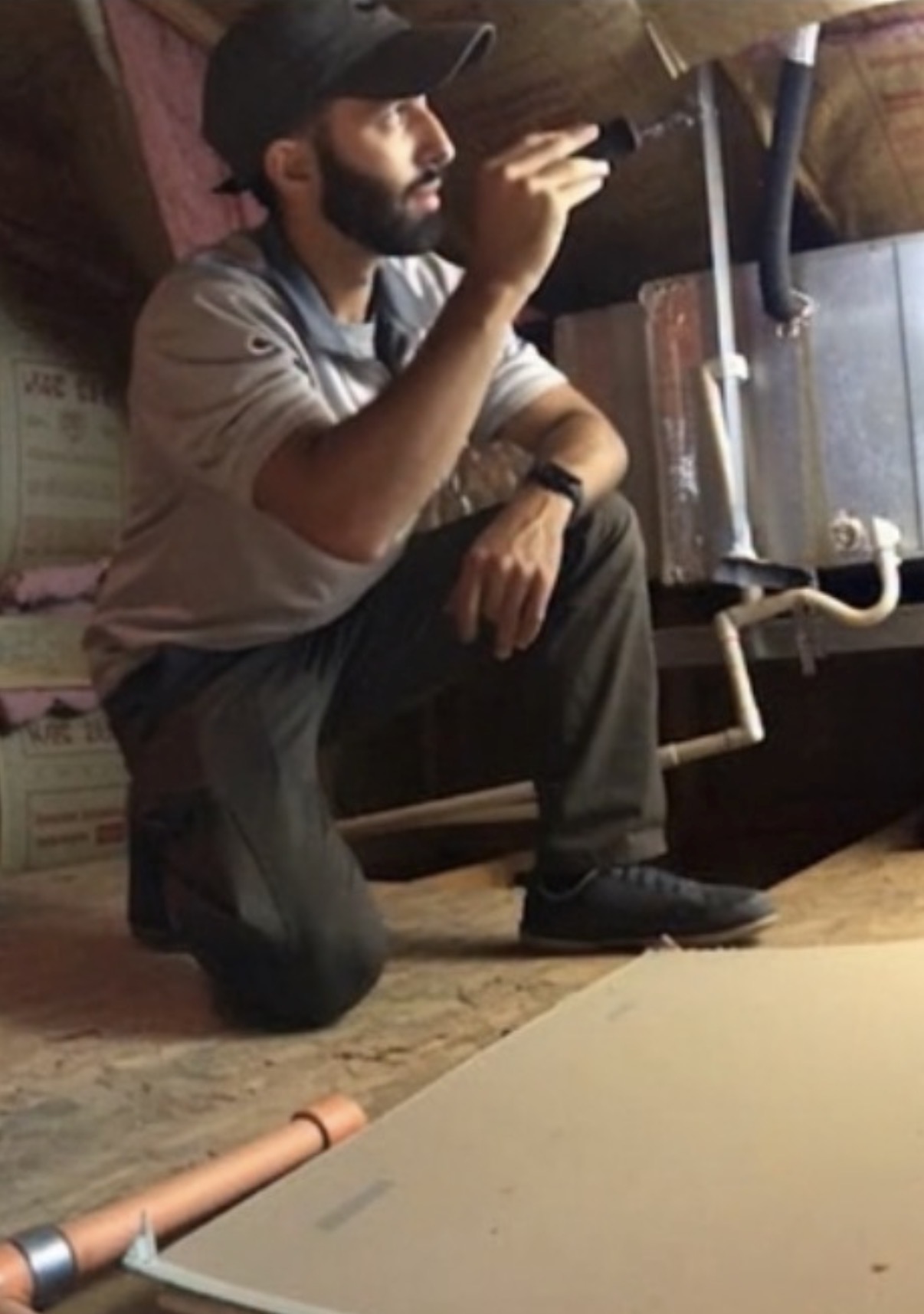
Mold testing and air quality testing confirm what a visual inspection can only suspect: how many mold spores are in the air, which types they are, and how the inside of the home compares to the air outside. Our team collects the samples in-house, led by Konnor Kirkwood (Arizona BTR #72416), sends them to a third-party lab for analysis, and typically delivers a report you can actually read two days after sampling. Thursday or Friday samples normally return Monday. We don't do mold remediation. That independence is the point.
Samples minimum on every test: one outdoor baseline, two inside
Typical results after sampling; Thursday or Friday samples normally return Monday
Testing homes across the Valley
We look first, then sample where it tells us something. Here's the full scope.
We look where water hides: under sinks, around the water heater, at the base of walls, around windows and in the attic at the roof deck. A moisture meter backs up what the eye suspects.
The air handler runs hard all summer. A clogged condensate drain or wet insulation in that cabinet can feed growth that rides the ductwork into every room.
Every result gets read against the air outside. Spores inside aren't automatically a problem. Differences in indoor and outdoor samples need professional interpretation alongside the visual and moisture findings.
At least two inside, placed in the rooms of concern. More rooms of concern, more samples.
When we can see suspect growth, a swab or tape sample tells the lab exactly what it is.
After a remediation company finishes, independent sampling checks the work before the walls close up. Nobody should grade their own homework.
We collect the samples. An outside lab counts and identifies the spores. Nobody in this process is selling you a cleanup.
Which spore types showed up, how inside compares to outside, and what that means for this house.
Typically delivered two days after sampling, lab results attached, with a clear next step if something came back high. Thursday or Friday samples normally return Monday.
Sampling fits inside your home inspection visit or runs on its own. If it's part of your inspection, we go over what we saw in the verbal summary at the end. The samples go to the lab, and your report with the lab results typically arrives two days after sampling. Thursday or Friday samples normally return Monday.
A visual check with a moisture meter tells us where to sample and what the lab should be looking for.
One outdoor baseline and at least two indoor samples, plus surface samples when we can see suspect growth.
The report typically lands two days after sampling with the lab data and a plain-language read on what it means. Thursday or Friday samples normally return Monday.
The full walk, roof to foundation, with a report the same day.
Invisible, odorless, and present in Arizona. Testing is the only way to know.
Infrared highlights surface-temperature patterns that may indicate moisture or insulation problems. Suspected moisture needs confirmation.
A camera down the line so you see what you're buying underground.
"He was communicative, personable, and thorough with his service and provided me a detailed report of his inspection along with the mold testing results."
Alli S., Google review
Straight answers on mold and air quality. Anything else, just call.
A mold inspection is a visual check for growth and moisture. Mold testing adds lab analysis of air or surface samples to identify spore types and count them. We do both in the same visit, so a clean-looking room still gets an answer about the air.
There's no federal standard for mold spore counts in a home. That's why the outdoor baseline matters. The lab compares indoor and outdoor samples. Those results are interpreted alongside the visual and moisture findings; sampling alone cannot rule out a mold problem.
Yes. A leak that was dried out and repaired properly isn't a mold problem. A leak that was dried on the surface and closed back up can have growth inside the wall. Air sampling can add evidence, but it cannot by itself rule out hidden mold behind a repaired wall.
Every test includes at least three: one outdoor baseline and two indoor samples. Bigger homes or more rooms of concern can call for more. We'll tell you what makes sense before we start.
We walk you through what the lab found and whether it looks like a contained problem or a wider one. If remediation makes sense, you'd hire a licensed remediation company. We don't do remediation, and we can come back afterward for independent clearance testing.

Your Home. Your Health. Our Priority.
© 2026 Breathe Easy Home Inspections
Gilbert, Chandler, Mesa, Queen Creek, Scottsdale, Tempe, and the greater Phoenix Valley.